Prusa
  • BOUTIQUE
    • Derniers produits
    PAR CATÉGORIE
    • Imprimantes 3Dnouveau
    • Mises à niveau d'imprimantes 3Dnouveau
    • Matériaux
    • Accessoires
    • Pièces de rechange
    • Cours
    • Produits dérivés
    • Obtenir un devis
    LIENS RAPIDES
    • Expédition et livraison
    • Retours et remboursements
    • Paiement et financement
    • Garantie
    • TVA et frais de douane
    • FAQ

    0 article au panierarticles au panier

    Votre panier est vide

    Voir le panierImprimantes 3D

    Mon profil

    Se connecter pour voir vos commandes et articles enregistrés

    Mon profil

    Connecté en tant que

    • Commandes
    • Déconnexion
  • Impression 3D
    • Explorer l'impression 3D
    POUR LES DÉBUTANTS
    • Impression 3D : les bases
    • Comment fonctionne l'impression FDM
    • Acheter votre première imprimante
    • Catalogue de modèles 3D
    PAR APPLICATION
    • Prototypage rapide
    • fabrication
    • Ingénierie
    • Recherche
    • Arts et design
    ALLER PLUS LOIN
    • Guide des matériaux
    • Cours
    • Webinaires
    • Études de cas
    • Impression 3D personnalisée
  • Imprimantes 3D
    • Toutes les imprimantes 3D
    pour
    • Maison ou garageAmateurs, bricoleurs et impression à domicile
    • EntrepriseProduction interne pour les petites équipes
    • EntrepriseFlottes, sécurité et échelle
    • Quelle Prusa me convient le mieux
    ACHETER ET NAVIGUER
    • CORE One+nouveau
    • CORE One+ INDXnouveau
    • CORE One L+nouveau
    • CORE One L+ INDXnouveau
    • XL+nouveau
    • MK4S
    • Prusa PRO HT90
    • Prusa Pro AFS
    • Prusa PRO SLX
    PLUS D'IMPRIMANTES
    • Pièces et mises à niveaunouveau
    • Infrastructure critique
    • Études de cas
    • Chêne Signature
    • Kits
  • Matériaux
    • Tous les matériaux
    PAR UTILISATION
    • Quotidien et design
    • Ingénierie fonctionnelle
    • Composites
    • Spécialité pro
    • Résines SLA
    Prusament
    • PLA
    • PETG
    • ASA
    • PC
    • PA11
    • Flex
    • TPU
    PLUS DE MATÉRIAUX
    • Guide des matériaux
    • Nous fabriquons nos matériaux en interne
    • Durabilité
    • Commander sur la boutique
  • Logiciel
    • Tous les logiciels
    PRÉPARER L'IMPRESSION
    • PrusaSlicer 3.0nouveau
    IMPRIMER ET SURVEILLER
    • Prusa Connect
    • EasyPrint
    • Application iOS et Android
    • Ferme Prusa
    COMMENCER
    • Télécharger et installer
    • Base de connaissances
    PLUS DE LOGICIELS
    • Catalogue de modèles 3D
  • ASSISTANCE
    • Explorer l'assistance
    TROUVER DES RÉPONSES
    • Base de connaissances
    • Dépannage
    • Cours
    • Webinaires
    OBTENIR DE L'AIDE
    • Contactez-nous
    • Chat en direct
    • Expédition et livraison
    • Garantie
    • Retours et remboursements
    • Service et pièces de rechange
    • Service et réparation
    Communauté
    • Forum
    • Reddit
    • Printables
  • Centre de confiance
    • Aperçu du Trust Center
    PAR SUJET
    • RGPD
    • Certificats
    • Sécurité
    • Conformité
    ENGAGEMENTS
    • Rapport de durabilité
    PARLEZ-NOUS
    • Contacter l'équipe de sécurité
  • Entreprise
    • À propos de Prusa
    APPRENEZ À NOUS CONNAÎTRE
    • Notre histoire
    • Comment nous fabriquons les imprimantes
    • Open source
    • Kit de marque et de médias
    ACTUALITÉS
    • Blog
    • Salle de presse
    • Événements
    CONFIANCE ET PARTENAIRES
    • Durabilité
    • Revendeurs et distributeurs
    • Programme d'affiliation
    • Contact
    • English
    • Čeština
    • Deutsch
    • Español
    • Français
    • Italiano
    • Polski
    • 日本語
  • Connecté en tant que

    • Commandes
    • Adresse
    • Alertes de stock
    • Mes cours
    • Abonnement
    • Modifier le compte
    • Déconnexion

Se connecter pour voir vos commandes et articles enregistrés

Connecté en tant que
  • Commandes
  • Adresse
  • Alertes de stock
  • Mes cours
  • Abonnement
  • Modifier le compte
  • English
  • Čeština
  • Deutsch
  • Español
  • Français
  • Italiano
  • Polski
  • 日本語
Boutique

0 article au panierarticles au panier

Votre panier est vide

Voir le panierImprimantes 3D

Mon profil

Se connecter pour voir vos commandes et articles enregistrés

Mon profil

Connecté en tant que

  • Commandes
  • Déconnexion
BOUTIQUE
  • Derniers produits
PAR CATÉGORIE
  • Imprimantes 3Dnouveau
  • Mises à niveau d'imprimantes 3Dnouveau
  • Matériaux
  • Accessoires
  • Pièces de rechange
  • Cours
  • Produits dérivés
  • Obtenir un devis
LIENS RAPIDES
  • Expédition et livraison
  • Retours et remboursements
  • Paiement et financement
  • Garantie
  • TVA et frais de douane
  • FAQ

Produits en vedette

    Catégories populaires

      Recherches populaires

        Produits

          Articles

            Blog

              Catégories

                Recherches suggérées

                  Recherche…
                  Aucun résultat
                  Une erreur est survenue.
                  ↑↓ Sélectionner↵ OuvrirEsc Fermer la recherche

                  Dans cette histoire

                  1. A 27-kilometre machine that the Earth keeps moving27 km · 100 m down
                  2. A bead that carries a wire for 200 metres200 m of wire
                  3. Test it in plastic before you commit the expensive materialPrototype → final part
                  4. Changing the sample without turning the beam offBeam stays on

                  Blog

                  • Imprimez des décorations d’Halloween colorées et lumineuses grâce à notre offre effrayante
                  • Factorio est arrivé sur Printables
                  • Prusament PLA Lightweight : 65% plus léger que le PLA ordinaire. Un choix parfait pour les aéronefs, le cosplay et bien plus encore.

                  Newsletter

                  Abonnez-vous et obtenez notre dose mensuelle d'informations utiles au sujet des nouveaux firmware, des nouvelles versions de PrusaSlicer et des conseils généraux pour les projets d'impression 3D.

                  En cliquant, vous acceptez de recevoir notre newsletter.

                  Ce site est protégé par reCAPTCHA Enterprise et la Politique de confidentialité et les Conditions d'utilisation de Google s'appliquent.

                  Factorio Transport Belts
                  Boutique en ligne
                  • Imprimantes 3D
                  • Mises à niveau d'Imprimante
                  • Filaments
                  • Accessoires
                  • Merchandising Prusa

                  © Prusa Research a.s.

                  Printables
                  • Modèles 3D
                  • Store
                  • Clubs
                  • Concours de Design 3D
                  • Brands
                  Communauté
                  • Carte du Monde
                  • Forum
                  • Groupes d'Utilisateurs
                  • Événements
                  Aide
                  • Aide Prusa
                  • Prusa Academy
                  • Calculatrices d'Impression 3D
                  Logiciel
                  • PrusaSlicer
                  • Prusa.app
                  • Prusa Connect
                  • Pilotes et Logiciels
                  Société
                  • À Propos de Nous
                  • Blog
                  • Revendeurs officiels Prusa
                  • Nous Contacter
                  • Certifiée selon les normes ISO 9001, ISO 14001 et ISO 45001
                  • Conditions Générales
                  • Conditions Générales d'Utilisation des sites web PRUSA
                  • Politique de confidentialité
                  • Informations sur les cookies
                  • Politique de traitement des réclamations clients
                  • Page d'état des sites web
                  • Paramètres des cookies
                  • Conditions Générales
                  • Conditions Générales d'Utilisation des sites web PRUSA
                  • Politique de confidentialité
                  • Informations sur les cookies
                  • Politique de traitement des réclamations clients
                  • Page d'état des sites web
                  • Paramètres des cookies

                  © Prusa Research a.s.

                  JOSEF PRUSA®, PRUSA RESEARCH®, PRUSA POLYMERS®, PRUSA ORANGE®, PRUSA 3D ® ET PRUSAMENT® sont des marques déposées de Prusa Development a.s. utilisées par Prusa Research a.s. sous licence de Prusa Development a.s.

                  1. Home
                  2. /
                  3. Case Studies
                  4. /
                  5. Education
                  6. /
                  7. CERN

                  Education · Research

                  “3D printing allows scientists and engineers to quickly create prototypes and push the boundaries of what’s possible.”

                  DZDina ZimmermannStructural engineer at IdeaSquare, CERN
                  CERN
                  Get a price quote
                  Read the story4 chapters

                  CERN, in three numbers

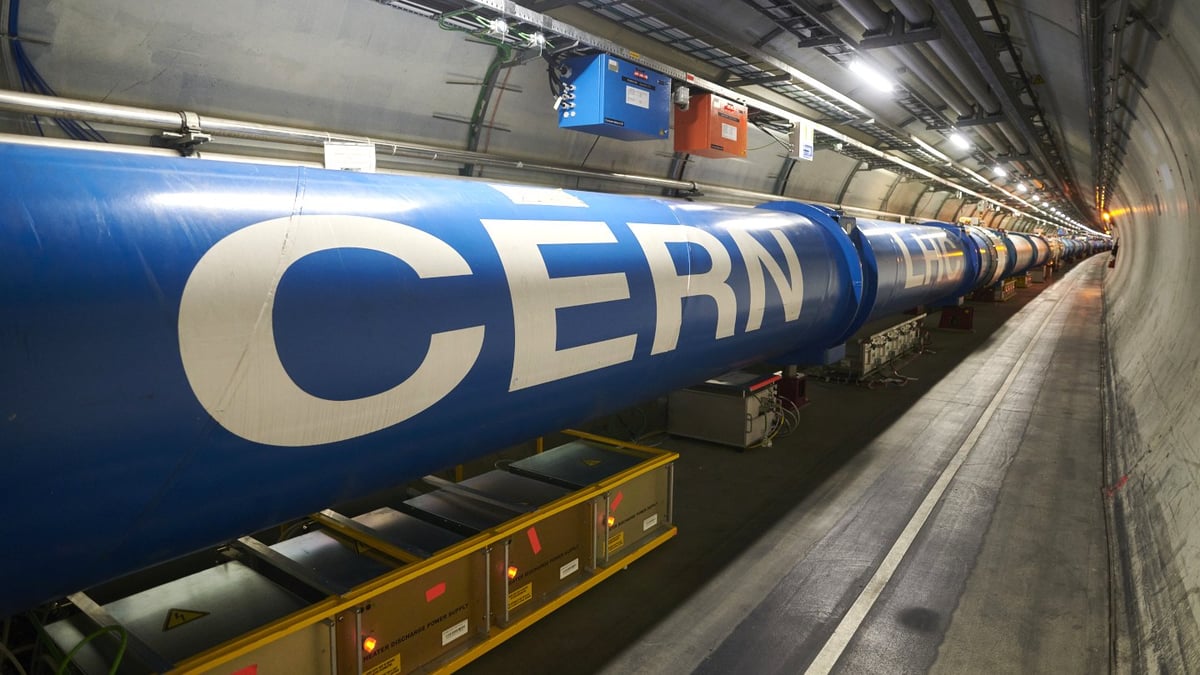
                  CERN — the European Organization for Nuclear Research — has studied the particles that make up matter from Geneva since 1954, with 12,000+ people and the Large Hadron Collider. Original Prusa printers run across its departments, and some of what they print goes into the tunnel.

                  • 12,000+people at CERN
                  • 27 kmthe LHC ring
                  • 100 munderground
                  27 kmthe LHC ring · 100 m underground

                  Keeping it aligned is challenging because of the Earth’s own movements — and at this scale, everything on it must be custom-made.

                  A 27‑kilometre machine that the Earth keeps moving

                  1. ProblemThe Large Hadron Collider is buried 100 metres underground and spans 27 kilometres, and it has to stay perfectly aligned for the experiments to mean anything. The Earth’s own movements work against that. [3D Printing Now 01/2024, p26] “Thanks to LHC’s scale and complexity, it’s only natural that everything must be custom-made.” [p26]
                  2. SolutionCERN engineers design and produce the sensors, control systems and accelerators that measure and adjust the positions of the large magnets. 3D printing is used not only for testing but for parts that are installed directly in the tunnels of the LHC. [p26] The printers are not kept in one lab: on Prusa’s visit they were found throughout the departments, from maintenance and IT to the research facilities. [blog]
                  3. ValueThe benefits box puts it as “cuts costs with 3D-printed models used directly in LHC” and “speeds up creation of parts for extreme environments”. [p27]

                    “We use 3D printing a lot. It’s not just for testing, we also use it to create parts that go directly into the tunnels of the Large Hadron Collider.”

                    Jonas Kampp, Mechatronics engineer at CERN (Prusa blog)

                    27 km · 100 m down
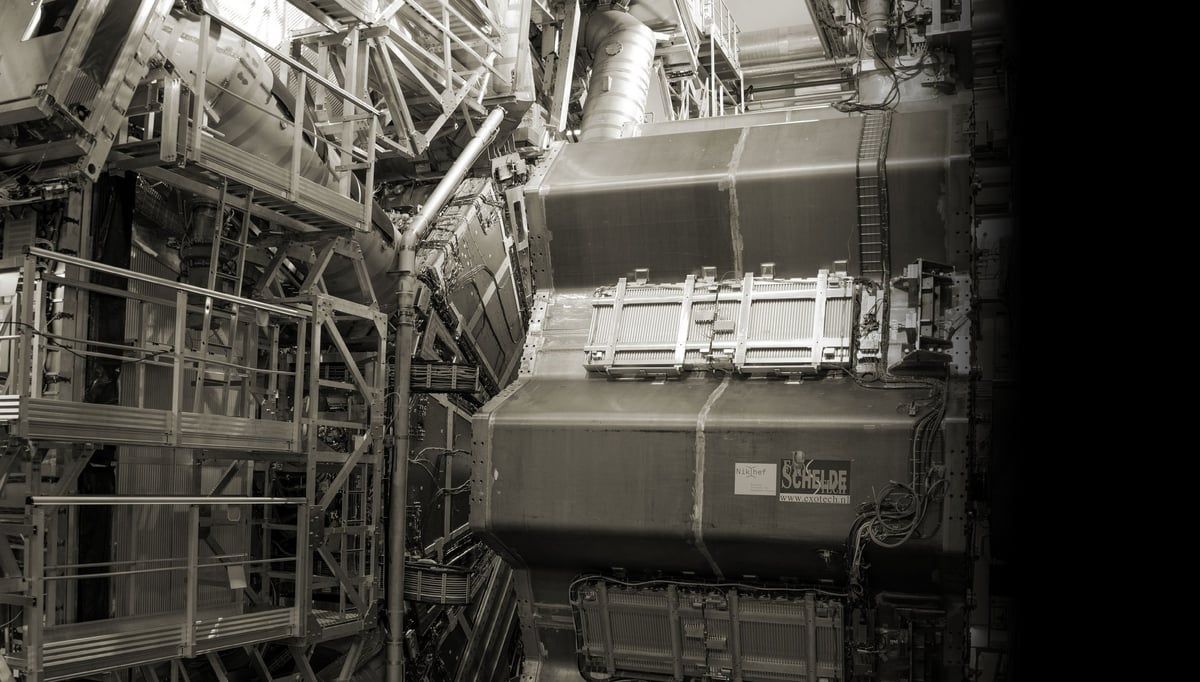
                  Steel scaffolding and access platforms around a cylindrical experiment barrel at CERN
                  The article’s opening spread: the scale everything else on this page is made for. [p24–25]

                  A bead that carries a wire for 200 metres

                  1. ProblemDistances in a critical part of the LHC are measured by a fragile wire spanning 200 metres — on each side of the four experiments. Much of the rest of the equipment runs on fragile fiber optics, where a bend that is too sharp cracks the glass inside and ruins the signal. [p26–27; blog]
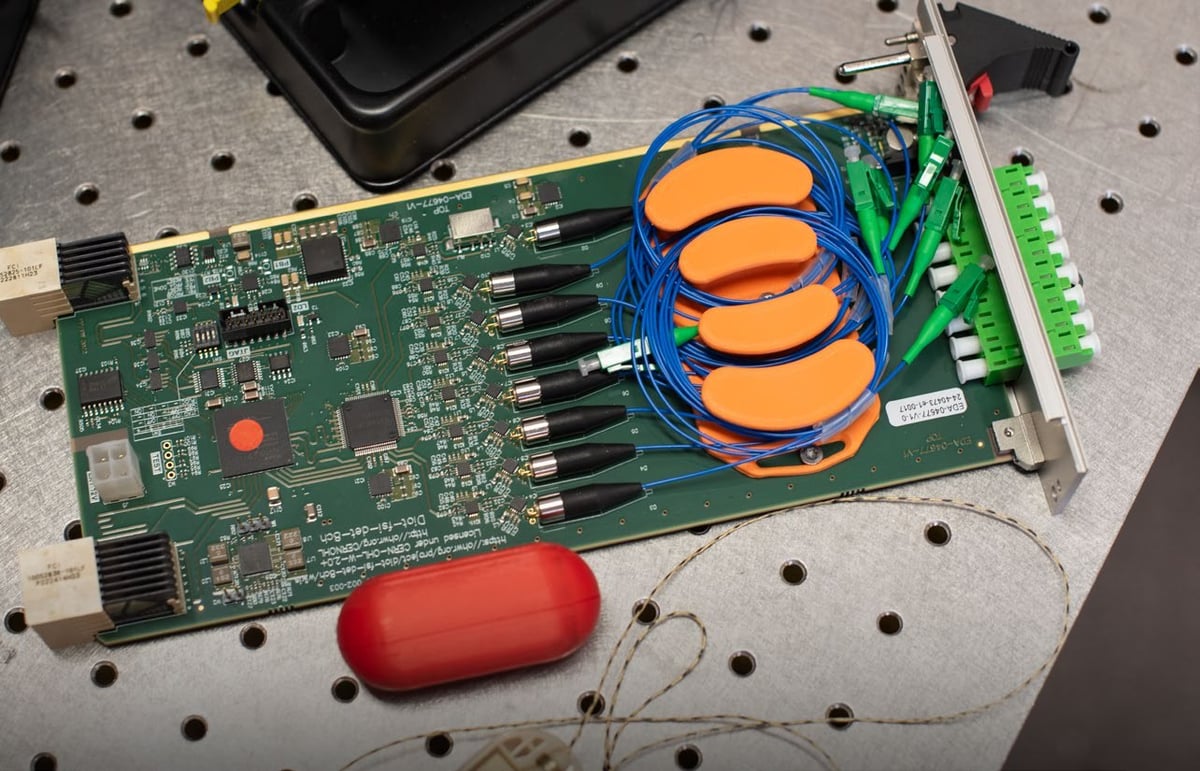
                  2. SolutionA bead made on an Original Prusa 3D printer carries the wire and protects it from damage [p26] — it took a lot of time and a lot of attempts to get right [blog]. Around it, printed casings and guides safeguard the optics: the FSI photodetection module has a printed component that organises the optical fibers into neat coils so they never bend sharply. [p27]
                  3. ValueThese are not models of parts. They are the parts, in the tunnel, doing the measuring — printed because at this scale everything is a one-off anyway. [p26]

                  A green circuit board with four orange printed spools holding coiled blue fibre-optic cable, and a red printed capsule beside it
                  Essential tools used for calibrating the LHC: optical wire safeguard and calibration bead. [p26]

                  Test it in plastic before you commit the expensive material

                  1. ProblemA tool for the LHC has to be proven reliable before the expensive material is committed to it — and at CERN the expensive material can be the whole point of the experiment. [p27]
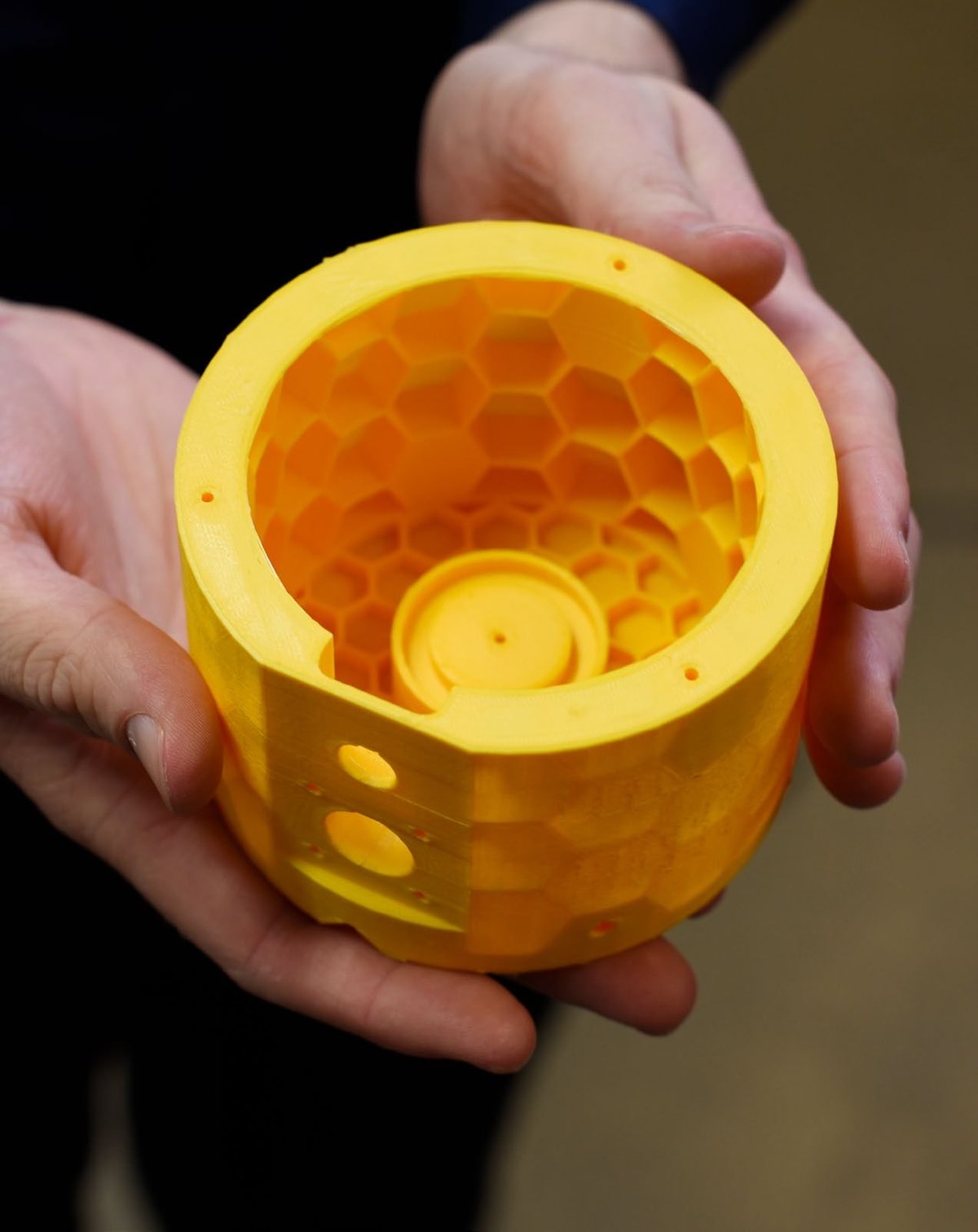
                  2. SolutionPrint the test. A feasibility print for a Hydrostatic Levelling System sensor was made to explore whether the part could be printed in metal and the production cost brought down [p27; blog]. A prototype connector between two Wire Positioning System sensors went the same way — and was redesigned several times before the article was even published. [p27; blog] Printed tubing connectors are made custom and stay easily modifiable — the property that a machined part loses the moment it exists. [p27, photo caption]
                  3. Value“Often, these printed models are even used as final products.” The benefits box adds the other half: it reduces expensive material usage in prototype testing, and produces final-use prototypes quickly for high-stakes projects. [p27]

                  Two hands holding a yellow printed cylindrical part with a honeycomb interior
                  Print and tune – then use CNC – prototype of Hydrostatic Levelling System prototype. [p26, the magazine’s own caption]

                  Changing the sample without turning the beam off

                  1. ProblemCERN’s CLEAR accelerator aims a radiation beam at cancer cells to spare the healthy tissue around them. The experiment needs irradiated samples swapped quickly — and with radiation in the room, human safety comes first, so nobody can simply walk in and do it. [p27; blog] The VITO project has the same problem in a different shape: liquid samples in a high-vacuum setting, where opening and closing the equipment to change one costs time. [p27; blog]
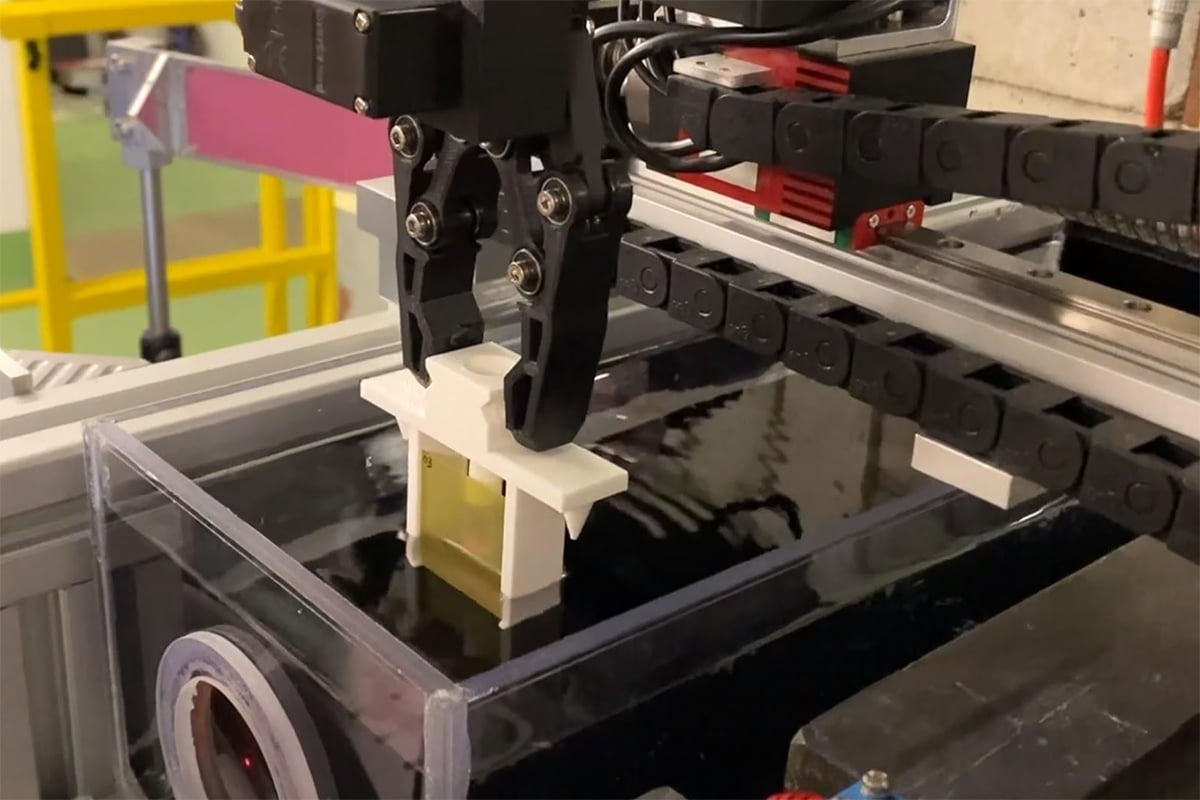
                  2. SolutionAt IdeaSquare — the workshop where young minds work alongside seasoned scientists — a 3D-printed robotic solution swaps the samples without interrupting the beam, and the sample boxes themselves are printed there. [p27; blog] For VITO, a special holder and a 3D-printed 8 mm capillary let the samples change without stopping the experiment. The capillary is printed from resin on an Original Prusa SL1. [p27; blog]
                  3. ValueThe beam keeps running, the people stay out of the room, and the experiment stops waiting for its own housekeeping. [p27]

                    “3D printing allows scientists and engineers to quickly create prototypes and push the boundaries of what’s possible,”

                    Dina Zimmermann, Structural engineer at IdeaSquare, CERN

                    Beam stays on
                  A black printed two-finger gripper on a linear rail lowering a white printed sample holder into a clear tank
                  This is how the robot switches the samples. [blog]

                  Could your lab print the part instead of waiting for it?

                  Tell us what you are building. We will come back with the machines, the materials and the parts other research groups print first.

                  • Free, no commitment — answer within 1 business day
                  Get a price quote

                  Still not sure where 3D printing fits your classroom?

                  See what other companies print — a classroom, a hangar, a car plant, a transplant clinic.

                  Browse all stories by industry or application
                  Every one of ETH Zurich’s 100+ printers was built by a student

                  Customer story — ETH Zurich

                  Every one of ETH Zurich’s 100+ printers was built by a student

                  The architecture department’s HYTAC programme trains 300+ students a term, and each of them assembles an Original Prusa kit in two days before printing anything. It started as a maintenance problem: the university could fund the machines, but not the people to keep them running.

                  • 100+Original Prusa printers
                  • 300+students trained per term
                  • 20printers replaced each year
                  “I can’t imagine a world without 3D printing. It just wouldn’t work!”
                  JBJonathan BenhamuFounder of HYTAC and lecturer at ETH Zurich
                  1 / 4

                  Your team’s questions, answered

                  What engineering, quality and procurement usually ask before the first print.

                  Manufacturing Engineer

                  Tooling / production

                  R&D Engineer

                  Materials / durability

                  Quality / Traceability Engineer

                  Quality assurance

                  Maintenance Technician

                  Spares / repairs

                  Procurement Lead

                  Purchasing

                  Could your lab print the part instead of waiting for it?Could your lab print the part instead of waiting for it?Get a price quote