Prusa
  • ショップ
    • 最新製品
    カテゴリー別
    • 3Dプリンター新着
    • 3Dプリンターアップグレード新着
    • 材料
    • アクセサリー
    • スペアパーツ
    • コース
    • グッズ
    • 見積もりを取得
    クイックリンク
    • 配送と配達
    • 返品と返金
    • 支払いと融資
    • 保証
    • VATと関税
    • よくある質問

    0 点の商品がカートに入っています点の商品がカートに入っています

    カートは空です

    カートを見る3Dプリンターを購入

    マイプロフィール

    ログイン すると注文や保存した商品を確認できます

    マイプロフィール

    ログイン中:

    • 注文
    • ログアウト
  • 3Dプリント
    • 3Dプリントを探る
    初心者向け
    • 3Dプリントの基礎
    • FDM印刷の仕組み
    • 初めてのプリンターを購入する
    • 3Dモデルカタログ
    用途別
    • ラピッドプロトタイピング
    • 製造
    • エンジニアリング
    • 研究
    • アートとデザイン
    さらに深く
    • 材料ガイド
    • コース
    • ウェビナー
    • 導入事例
    • カスタム3Dプリンティング
  • 3Dプリンター
    • すべての3Dプリンター
    用途
    • 自宅またはガレージ愛好家、改造愛好家、ホームプリンティング
    • ビジネス小規模チーム向けの社内生産
    • エンタープライズフリート、セキュリティ、大規模生産
    • どのPrusaが私に適していますか
    ショップと閲覧
    • CORE One+新着
    • CORE One+ INDX新着
    • CORE One L+新着
    • CORE One L+ INDX新着
    • XL+新着
    • MK4S
    • Prusa Pro HT90
    • Prusa Pro AFS
    • Prusa Pro SLX
    プリンターからさらに
    • 部品とアップグレード新着
    • 重要インフラ
    • 導入事例
    • シグネチャーオーク
    • キット
  • 材料
    • すべての材料
    用途別
    • 日常とデザイン
    • 機能工学
    • 複合材料
    • プロフェッショナル向け特殊材料
    • SLAレジン
    Prusament
    • PLA
    • PETG
    • ASA
    • PC
    • PA11
    • Flex
    • TPU
    材料からさらに
    • 材料ガイド
    • 自社製材料
    • サステナビリティ
    • ストアで注文
  • ソフトウェア
    • すべてのソフトウェア
    印刷の準備
    • PrusaSlicer 3.0新着
    印刷と監視
    • Prusa Connect
    • EasyPrint
    • iOS & Androidアプリ
    • Prusaファーム
    始める
    • ダウンロードとインストール
    • ナレッジベース
    その他のソフトウェア
    • 3Dモデルカタログ
  • サポート
    • サポートを探す
    回答を探す
    • ナレッジベース
    • トラブルシューティング
    • コース
    • ウェビナー
    ヘルプ
    • お問い合わせ
    • ライブチャット
    • 配送と配達
    • 保証
    • 返品と返金
    • サービスとスペアパーツ
    • サービスと修理
    コミュニティ
    • フォーラム
    • Reddit
    • Printables
  • トラストセンター
    • トラストセンター概要
    トピック別
    • GDPR
    • 証明書
    • セキュリティ
    • コンプライアンス
    コミットメント
    • サステナビリティレポート
    お問い合わせ
    • セキュリティチームに連絡
  • 会社
    • Prusaについて
    私たちについて
    • 私たちのストーリー
    • プリンターの製造方法
    • オープンソース
    • ブランド&メディアキット
    ニュース
    • ブログ
    • ニュースルーム
    • イベント
    信頼とパートナー
    • サステナビリティ
    • 再販業者と販売代理店
    • アフィリエイトプログラム
    • お問い合わせ
    • English
    • Čeština
    • Deutsch
    • Español
    • Français
    • Italiano
    • Polski
    • 日本語
  • ログイン中:

    • 注文
    • 住所
    • 在庫アラート
    • マイコース
    • サブスクリプション
    • アカウントを編集
    • ログアウト

ログイン すると注文や保存した商品を確認できます

ログイン中:
  • 注文
  • 住所
  • 在庫アラート
  • マイコース
  • サブスクリプション
  • アカウントを編集
  • English
  • Čeština
  • Deutsch
  • Español
  • Français
  • Italiano
  • Polski
  • 日本語
ショップ

0 点の商品がカートに入っています点の商品がカートに入っています

カートは空です

カートを見る3Dプリンターを購入

マイプロフィール

ログイン すると注文や保存した商品を確認できます

マイプロフィール

ログイン中:

  • 注文
  • ログアウト
ショップ
  • 最新製品
カテゴリー別
  • 3Dプリンター新着
  • 3Dプリンターアップグレード新着
  • 材料
  • アクセサリー
  • スペアパーツ
  • コース
  • グッズ
  • 見積もりを取得
クイックリンク
  • 配送と配達
  • 返品と返金
  • 支払いと融資
  • 保証
  • VATと関税
  • よくある質問

おすすめ製品

    人気のカテゴリー

      急上昇ワード

        製品

          記事

            ブログ

              カテゴリー

                検索候補

                  検索中…
                  結果がありません
                  エラーが発生しました。
                  ↑↓ 選択↵ 開くEsc 検索を閉じる

                  このストーリーの内容

                  1. A 27-kilometre machine that the Earth keeps moving27 km · 100 m down
                  2. A bead that carries a wire for 200 metres200 m of wire
                  3. Test it in plastic before you commit the expensive materialPrototype → final part
                  4. Changing the sample without turning the beam offBeam stays on

                  ブログ

                  • Prusament PLA ColorMix:わずか5巻のフィラメントで45色以上をプリント
                  • PrusaSlicer 3.0プレビュー版 — 3Dプリントの未来を見据えた仕様
                  • より高品質なプリントを、もっと簡単に:Prusa XL+、CORE One L+、CORE One+(Gen 2)― 大規模製品アップグレード

                  ニュースレター

                  ご登録いただくと、毎月 新しいファームウェア、PrusaSlicerの新バージョン、3Dプリントプロジェクトの一般的なヒントなど、役立つ情報をお届けします。

                  クリックして、ニュースレターを受け取る。

                  このサイトはreCAPTCHA Enterpriseによって保護されており、Googleのプライバシーポリシーと利用規約が適用されます。

                  Factorio Transport Belts
                  E-shop
                  • 3Dプリンター
                  • プリンターのアップグレード
                  • フィラメント
                  • アクセサリー
                  • Prusa 商品

                  © Prusa Research a.s.

                  Printables
                  • 3Dモデル
                  • Store
                  • Clubs
                  • 3Dデザインコンテスト
                  • Brands
                  コミュニティ
                  • ワールドマップ
                  • フォーラム
                  • ユーザーグループ
                  • イベント
                  ヘルプ
                  • Prusa ヘルプ
                  • Prusa アカデミー
                  • 3Dプリンティング計算機
                  ソフトウェア
                  • PrusaSlicer
                  • Prusa.app
                  • Prusa Connect
                  • ドライバーとソフトウェア
                  会社概要
                  • 私たちについて
                  • Blog
                  • プルサ正規販売代理店
                  • お問い合わせ
                  • ISO 9001・ISO 14001・ISO 45001 認証取得済み
                  • 一般利用規約
                  • PRUSAウェブサイト利用のための一般利用規約
                  • プライバシーポリシー
                  • クッキーに関する情報
                  • お客様の苦情対応に関する方針
                  • Webサイトのステータスページ
                  • Cookie 設定
                  • 一般利用規約
                  • PRUSAウェブサイト利用のための一般利用規約
                  • プライバシーポリシー
                  • クッキーに関する情報
                  • お客様の苦情対応に関する方針
                  • Webサイトのステータスページ
                  • Cookie 設定

                  © Prusa Research a.s.

                  JOSEF PRUSA®、PRUSA RESEARCH®、PRUSA POLYMERS®、PRUSA ORANGE®、PRUSA 3D ® および PRUSAMENT® は、Prusa Development a.s. の登録商標であり、Prusa Research a.s. が Prusa Development a.s. からのライセンスに基づき使用しています。

                  1. Home
                  2. /
                  3. Case Studies
                  4. /
                  5. Education
                  6. /
                  7. CERN

                  Education · Research

                  “3D printing allows scientists and engineers to quickly create prototypes and push the boundaries of what’s possible.”

                  DZDina ZimmermannStructural engineer at IdeaSquare, CERN
                  CERN
                  Get a price quote
                  Read the story4 chapters

                  CERN, in three numbers

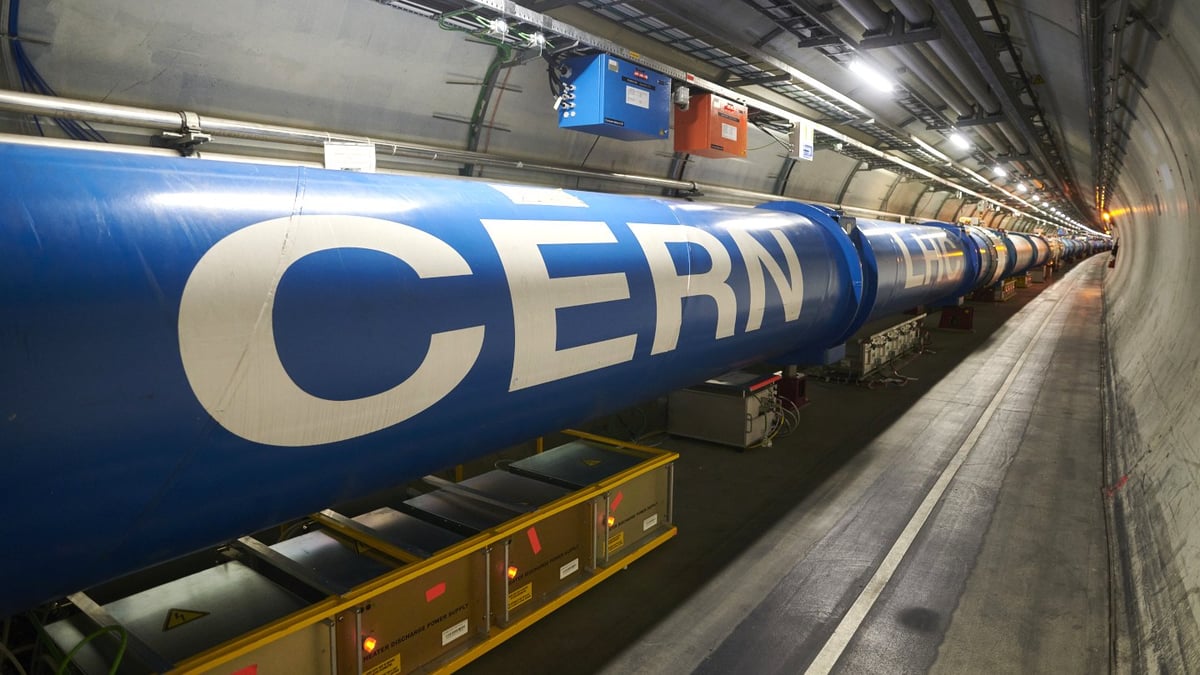
                  CERN — the European Organization for Nuclear Research — has studied the particles that make up matter from Geneva since 1954, with 12,000+ people and the Large Hadron Collider. Original Prusa printers run across its departments, and some of what they print goes into the tunnel.

                  • 12,000+people at CERN
                  • 27 kmthe LHC ring
                  • 100 munderground
                  27 kmthe LHC ring · 100 m underground

                  Keeping it aligned is challenging because of the Earth’s own movements — and at this scale, everything on it must be custom-made.

                  A 27‑kilometre machine that the Earth keeps moving

                  1. ProblemThe Large Hadron Collider is buried 100 metres underground and spans 27 kilometres, and it has to stay perfectly aligned for the experiments to mean anything. The Earth’s own movements work against that. [3D Printing Now 01/2024, p26] “Thanks to LHC’s scale and complexity, it’s only natural that everything must be custom-made.” [p26]
                  2. SolutionCERN engineers design and produce the sensors, control systems and accelerators that measure and adjust the positions of the large magnets. 3D printing is used not only for testing but for parts that are installed directly in the tunnels of the LHC. [p26] The printers are not kept in one lab: on Prusa’s visit they were found throughout the departments, from maintenance and IT to the research facilities. [blog]
                  3. ValueThe benefits box puts it as “cuts costs with 3D-printed models used directly in LHC” and “speeds up creation of parts for extreme environments”. [p27]

                    “We use 3D printing a lot. It’s not just for testing, we also use it to create parts that go directly into the tunnels of the Large Hadron Collider.”

                    Jonas Kampp, Mechatronics engineer at CERN (Prusa blog)

                    27 km · 100 m down
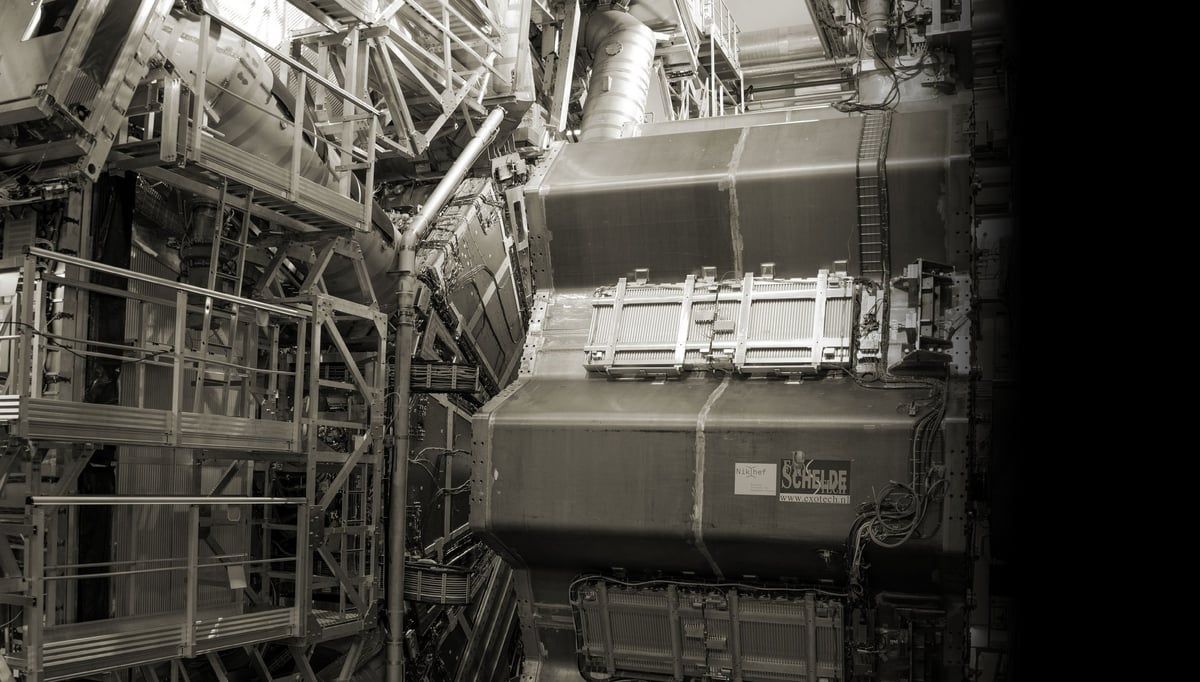
                  Steel scaffolding and access platforms around a cylindrical experiment barrel at CERN
                  The article’s opening spread: the scale everything else on this page is made for. [p24–25]

                  A bead that carries a wire for 200 metres

                  1. ProblemDistances in a critical part of the LHC are measured by a fragile wire spanning 200 metres — on each side of the four experiments. Much of the rest of the equipment runs on fragile fiber optics, where a bend that is too sharp cracks the glass inside and ruins the signal. [p26–27; blog]
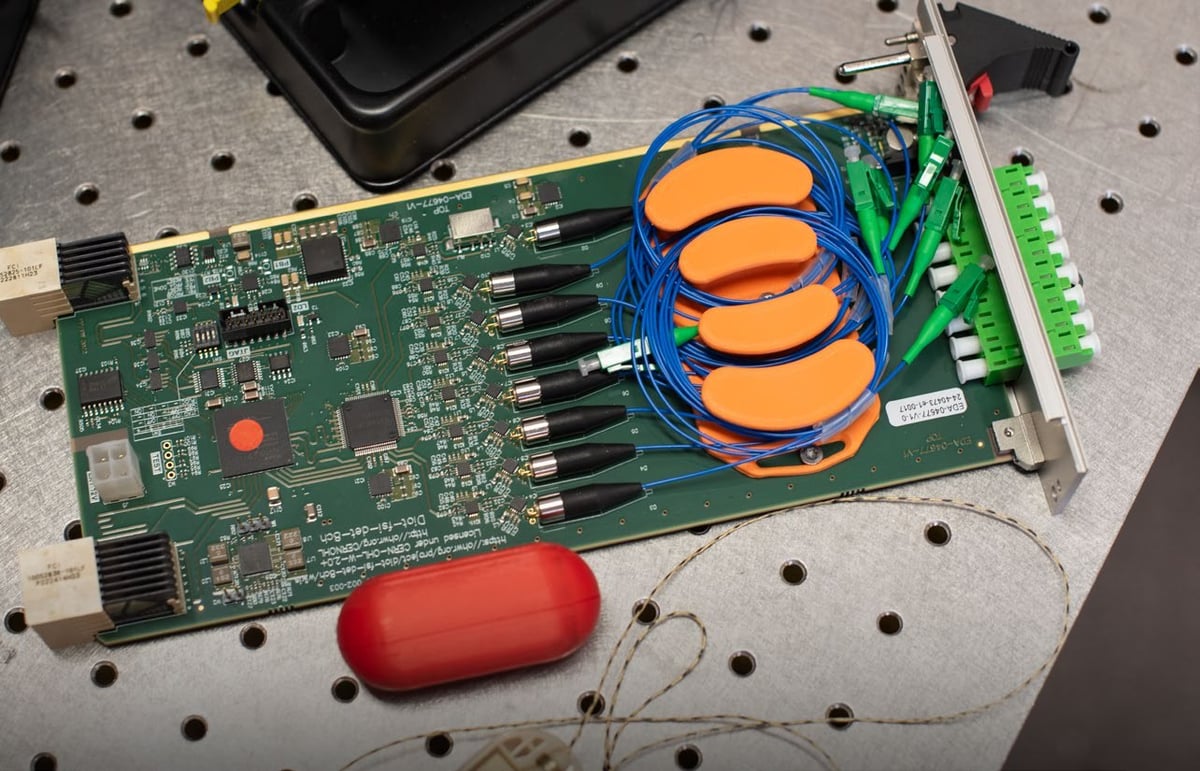
                  2. SolutionA bead made on an Original Prusa 3D printer carries the wire and protects it from damage [p26] — it took a lot of time and a lot of attempts to get right [blog]. Around it, printed casings and guides safeguard the optics: the FSI photodetection module has a printed component that organises the optical fibers into neat coils so they never bend sharply. [p27]
                  3. ValueThese are not models of parts. They are the parts, in the tunnel, doing the measuring — printed because at this scale everything is a one-off anyway. [p26]

                  A green circuit board with four orange printed spools holding coiled blue fibre-optic cable, and a red printed capsule beside it
                  Essential tools used for calibrating the LHC: optical wire safeguard and calibration bead. [p26]

                  Test it in plastic before you commit the expensive material

                  1. ProblemA tool for the LHC has to be proven reliable before the expensive material is committed to it — and at CERN the expensive material can be the whole point of the experiment. [p27]
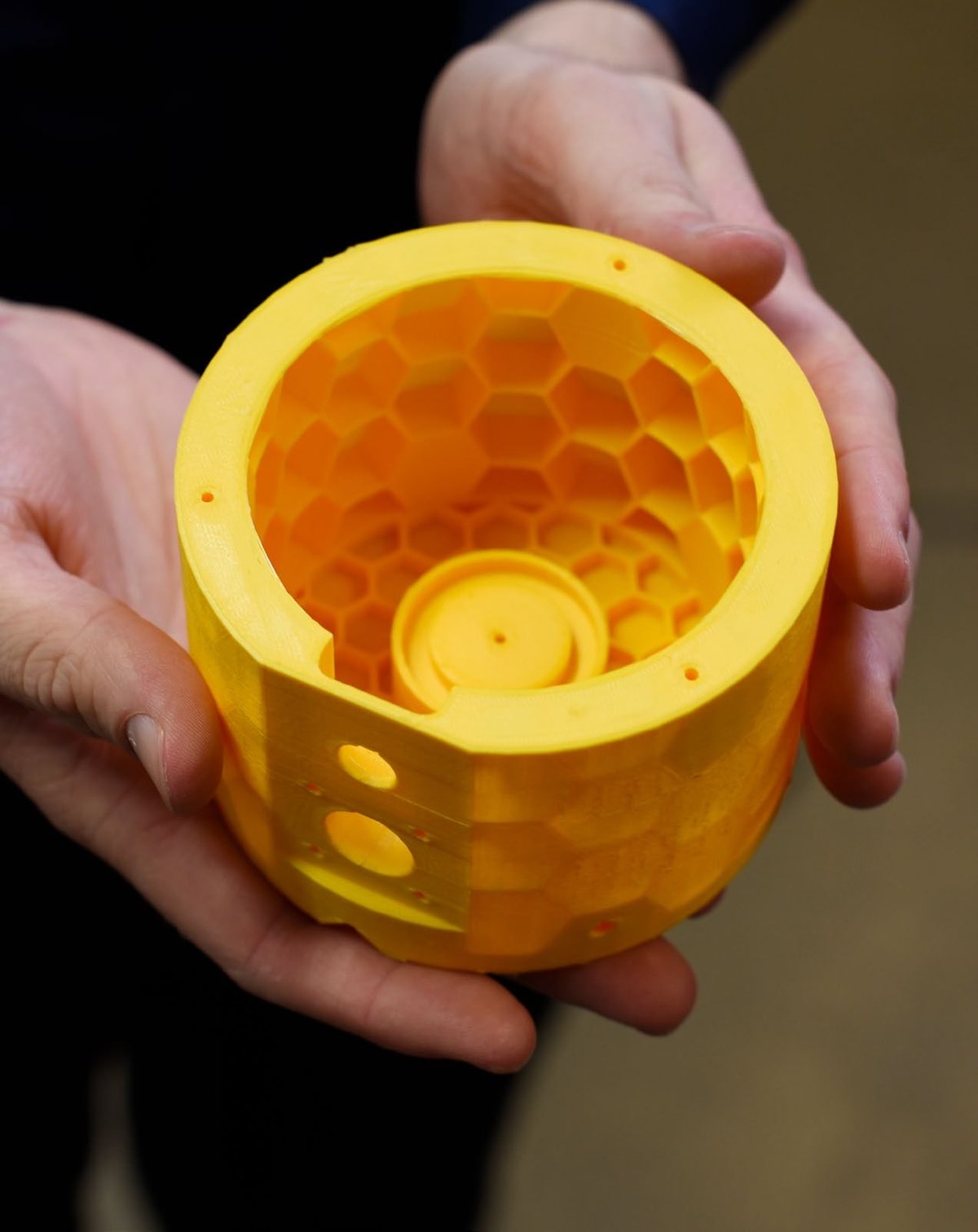
                  2. SolutionPrint the test. A feasibility print for a Hydrostatic Levelling System sensor was made to explore whether the part could be printed in metal and the production cost brought down [p27; blog]. A prototype connector between two Wire Positioning System sensors went the same way — and was redesigned several times before the article was even published. [p27; blog] Printed tubing connectors are made custom and stay easily modifiable — the property that a machined part loses the moment it exists. [p27, photo caption]
                  3. Value“Often, these printed models are even used as final products.” The benefits box adds the other half: it reduces expensive material usage in prototype testing, and produces final-use prototypes quickly for high-stakes projects. [p27]

                  Two hands holding a yellow printed cylindrical part with a honeycomb interior
                  Print and tune – then use CNC – prototype of Hydrostatic Levelling System prototype. [p26, the magazine’s own caption]

                  Changing the sample without turning the beam off

                  1. ProblemCERN’s CLEAR accelerator aims a radiation beam at cancer cells to spare the healthy tissue around them. The experiment needs irradiated samples swapped quickly — and with radiation in the room, human safety comes first, so nobody can simply walk in and do it. [p27; blog] The VITO project has the same problem in a different shape: liquid samples in a high-vacuum setting, where opening and closing the equipment to change one costs time. [p27; blog]
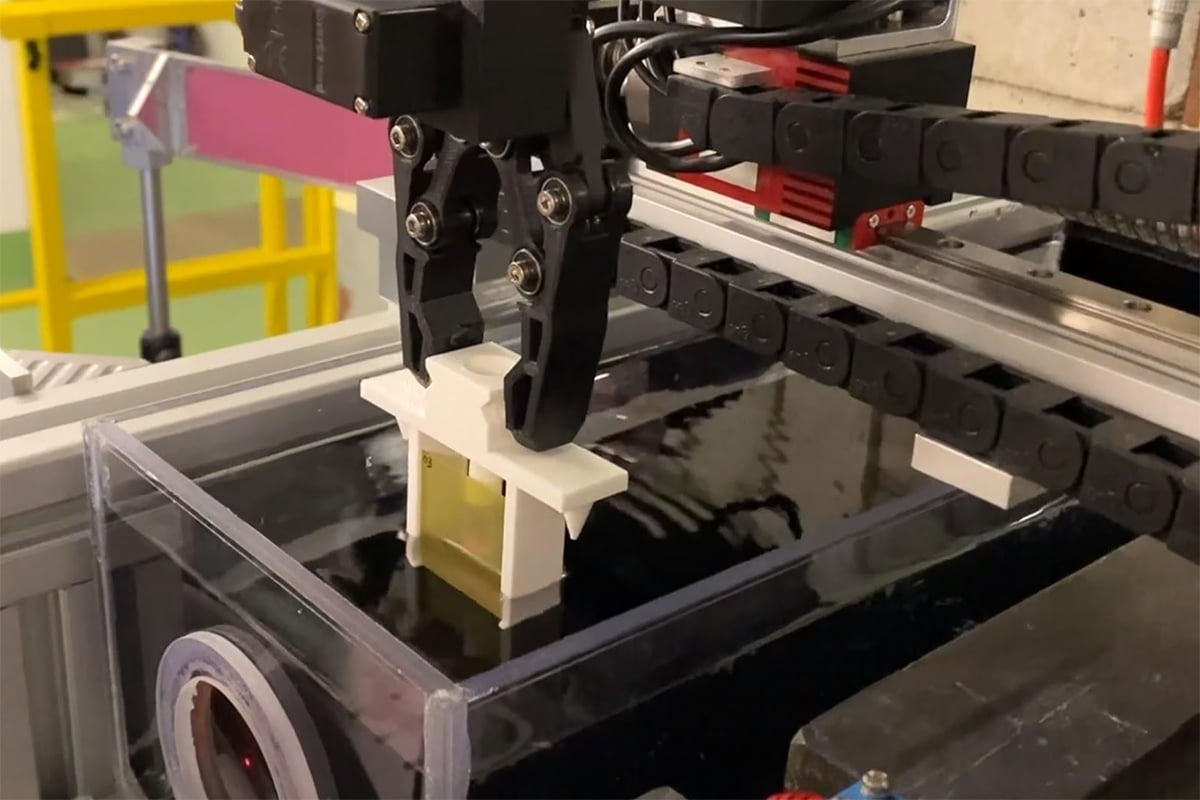
                  2. SolutionAt IdeaSquare — the workshop where young minds work alongside seasoned scientists — a 3D-printed robotic solution swaps the samples without interrupting the beam, and the sample boxes themselves are printed there. [p27; blog] For VITO, a special holder and a 3D-printed 8 mm capillary let the samples change without stopping the experiment. The capillary is printed from resin on an Original Prusa SL1. [p27; blog]
                  3. ValueThe beam keeps running, the people stay out of the room, and the experiment stops waiting for its own housekeeping. [p27]

                    “3D printing allows scientists and engineers to quickly create prototypes and push the boundaries of what’s possible,”

                    Dina Zimmermann, Structural engineer at IdeaSquare, CERN

                    Beam stays on
                  A black printed two-finger gripper on a linear rail lowering a white printed sample holder into a clear tank
                  This is how the robot switches the samples. [blog]

                  Could your lab print the part instead of waiting for it?

                  Tell us what you are building. We will come back with the machines, the materials and the parts other research groups print first.

                  • Free, no commitment — answer within 1 business day
                  Get a price quote

                  Still not sure where 3D printing fits your classroom?

                  See what other companies print — a classroom, a hangar, a car plant, a transplant clinic.

                  Browse all stories by industry or application
                  Every one of ETH Zurich’s 100+ printers was built by a student

                  Customer story — ETH Zurich

                  Every one of ETH Zurich’s 100+ printers was built by a student

                  The architecture department’s HYTAC programme trains 300+ students a term, and each of them assembles an Original Prusa kit in two days before printing anything. It started as a maintenance problem: the university could fund the machines, but not the people to keep them running.

                  • 100+Original Prusa printers
                  • 300+students trained per term
                  • 20printers replaced each year
                  “I can’t imagine a world without 3D printing. It just wouldn’t work!”
                  JBJonathan BenhamuFounder of HYTAC and lecturer at ETH Zurich
                  1 / 4

                  Your team’s questions, answered

                  What engineering, quality and procurement usually ask before the first print.

                  Manufacturing Engineer

                  Tooling / production

                  R&D Engineer

                  Materials / durability

                  Quality / Traceability Engineer

                  Quality assurance

                  Maintenance Technician

                  Spares / repairs

                  Procurement Lead

                  Purchasing

                  Could your lab print the part instead of waiting for it?Could your lab print the part instead of waiting for it?Get a price quote